Posts

Showing posts with the label amateur radio

Tupavco Panel Antenna TP-24-20-18 Teardown

Image
In eventual hope for getting on 2.3 GHz, I picked up a pair of very low cost surplus panel antennas originally intended for SISO 2.4 GHz ISM operation. These were likely for WISP or other internet range extension use. I'm going to presume that they're broadband enough to extend down into the narrowband amateur segment, but maybe I'll get the chance to test that before applying much power. Blank, smudged radome of a TP-24-20-18 antenna

Stable of HTs for SignalStuff Radio Models Directory

Image
Over at SignalStuff, there's a new directory of Radio Models  intended to help with handheld transceiver identification and antenna compatibility. Since I've got a small stable of HTs and a desire for another blog post, here are my entries for the database.

What's Inside: UHF/SHF Amplifier Modules

Image
In an effort to be prepared for figuring out how to work an integrated microwave SDR, I picked up three amplifier modules for 900, 1300, and 2400 MHz. They're all from the same eBay seller and presumably the same factory with matching enclosures, labeling, and design techniques. Lineup of the three amplifier modules (labeled 2.4G 10W, 1250, and 915) with the heatsink planned for future use.

Expanding on W1GHZ GaAsFET LNA Bias with Optocouplers

Image
After reading the W1GHZ GaAsFET LNA Bias entry, I wanted to see what the performance of these exposed-base optocouplers are. The concept comes from the IEEE Microwave Journal Application Notes: Photovoltaic Bias for Depletion-Mode Devices in Low-Noise Amplifier Applications (DOI 10.1109/MMM.2022.3226635). It's not open access, so I figured some publicly available characterization data would be cool to share. I have access to a dual-channel precision SMU (source-measure unit, Wikipedia ) and that's exactly what we need to characterize the photovoltaic behavior of optocouplers! Keysight B2902B SMU front panel during a 20 mA input, open circuit output measurement

UV-K5 Band Modding: Contemplating the "27 MHz" Band Lowering Projects

I've been sitting on my to-be-modded UV-K5 for a while now in hopes of having low-cost access to more bands . In my diversion from this project, others have put together some good work, though at the low end of the range. The ludwich66 GitHub wiki tracking UV-K5 projects covers them on the Hardware_Mods_27Mhz page . The two sets of PDFs were uploaded back in July 2024. Yeah, I'm behind a bit. Let's dive into what's been implemented.

POTA Award Achievement: James F. LaPorta N1CC Activator

Image
With the QSOs from my trip to California in October, I finally completed the requirements for a long-sought-after POTA award . James F. LaPorta N1CC Activator: Having QSOs from 10 different entities on 10 different band. I was trying to not have only one state (Wisconsin) parks on the list and ended up getting a 3-fer in California that satisfied the 10-band target. So not quite coast-to-coast, but more than just the local parks! Award: James F. LaPorta Award; In memory of N1CC issued to Thomas Murphy WN1C on 2024-11-04  

Speaker and PVC Stand for Elk 2M/440L5 Antenna

Image
What with the ARRL June VHF contest coming up this weekend and the weather being warmer than 12"+ of fresh powder experienced in January, I finished buying and putting together the right PVC parts to hold my Elk 2M/440L5 LPDA antenna stably above head height. It's composed of a cheap speaker stand with the speaker post inverted, 6' of 3/4" schedule 40 PVC pipe, a 3/4" to threaded to threaded to 1" fitting pair, and 2' of 1" PVC to fit the stock bracket of the Elk. Rotation is, of course, of the armstrong type. No additional handle required. Assembled stand setup in the apartment stairwell. 6' of RG-58 for scale hanging from the Elk antenna core (no elements mounted). Gets some decent reach!

6m Aurora QRP in G4 Storm and an X5+ Flare

Image
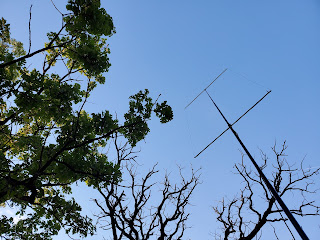
Being contemporaneous for a new achievement and experience: 6m auroral propagation with a QSO at 5W! With the G5 storm observed before 0Z, I built myself a more durable 6m full-wave loop and set out to experience some new amateur radio. Heading out to a local hilltop with a plan! Initial deployment of the 6m loop on my fiberglass pole for a tuning check and preparation for operating

A Multi-Pronged Approach to BK4819 HT Band Expansion

As previously discussed, the BK4819 simplex FM transceiver chip with specified coverage of 18-660 and 840 to 1300 MHz covers a lot of Region 2 amateur radio bands with generally accepted FM operation: 10 m, 6 m, 2 m, 1.25 m, 70 cm, 33 cm, and 23 cm. The most popular models of amateur-oriented HTs using the chip generally only cover the popular VHF/UHF split with 2m and 70cm (and wide enough filters to support nearby business/public safety bands). How this is implemented varies in cost, complexity, and potential for effective modification. Of course, it's not really a modification if it's an actual product, but more on that further in.

KX3 and Speaker Wire Camera Bag Activation Kit

Image
For the QRPer's Field Radio Kit Gallery , this is my KX3 and speaker wire in a camera bag activation kit. This kit is the continuation of the equipment I used for my Maine ATNO expedition and other activities on that return to my parents almost a year ago. Primarily, it's a change in bags and an improvement of the audio connection options for more sustained activations. Writing up this kit for the gallery also will probably be an incentive for further change. With how loosely packed it is, there's space for options! You can see this kit in action on my recent trail activation . The bag packed and ready for an expedition, even if just a little ways away.

Building a Moxon for 223 MHz

Image
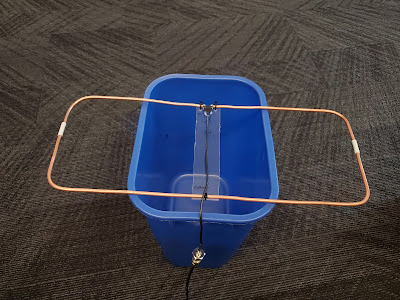
With an Elk Antennas 2M/440L5 providing me directional operation on 2m and 70cm and a couple handheld rigs that include 1.25m, I wanted more than just a stock whip to operate with those rigs. Since I have access to scraps of copper refrigerant tubing at the day job from test/prototype systems, I thought it'd be a great material to build with. To put it briefly, the results have been fantastic to start. As initially assembled on the terribly scientific test stand of an empty recycle bin.

Trail Activation: Capital State Trail With Imminent Rain

Image
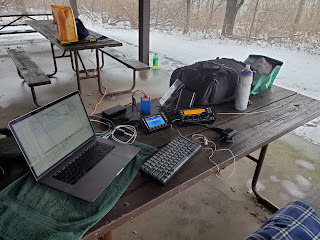
The afternoon after my sky picture , I went out to one of Wisconsin's newer POTA entities (Capital State Trail, K-9773) after work to pick up another activation. One of my hunted P2P contacts included a request for a station setup picture, so this is for VA5MUD who was operating from VE-0111. This was a quick activation cut right at 10 QSOs due to the arrival of the anticipated rain. Antenna setup using the trail emergency locator marker as a support for the fiberglass pole.

Hardware Filter Modifications for Quansheng UV-K5 Band Extensions?

The Quansheng UV-K5 ( product page archive ) handheld transceiver has been notable in cheap amateur radios of 2023 by using both a wideband FM chip BK4819 ( product page archive ). With support of 18-620 and 840-1200 MHz half-duplex with 6.25/12.5/20/25 kHz channel spacing, this puts the chip in the range of five ITU Region 2 amateur bands (10m, 6m, 2m, 1.25m, 70cm, 33 cm) and spitting distance from a sixth (23 cm). Presumably hitting 4m and the rare 8m would be within reason as well. The easily hackable firmware indicates at least nominal receive capability up to 1300 MHz, though!

Brief: Winter Field Day 2023 and POTA WAS

Image
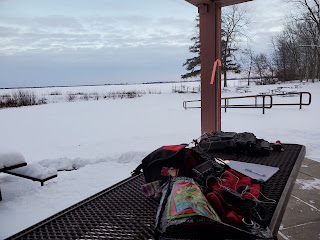
Last weekend was Winter Field Day 2023 and I caught the tail end of it to combine with some Parks on the Air at my favorite Governor Nelson State Park ( K-1452 , wiki ). Seven inches of fresh powder awaited between me and the shelter I activated from (and, of course, on the car before I left). Operating position looking across Lake Mendota to downtown Madison including the capitol

Durham State Forest: ATNO Research and Activation POTA K-4772 (Plus K-2396)

Image
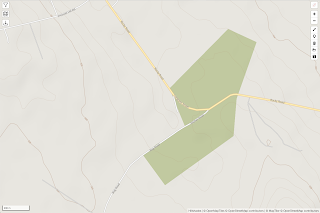
One of my objectives for the good weather in Maine during my holiday travel was to get out to the convenient and interesting parks in the area. As highlighted by W1DED 's map documenting POTA MAINE , there are a couple of Midcoast Maine parks that had no activations ever by 2022: both the Durham State Forest and Ducktrap River Wildlife Management Area. The reason? They're poorly documented locations with no convenient drive-up-and-know-you're-there place. The WMA even overlaps the local Ducktrap Preserve, but you'd have to figure out what that meant and where to hike. And the forest, well, the forest barely even seems to exist on the internet by that name! No official state information and just lots of OpenStreetMap references. I looked to take on the forest to understand where it was, what the access looked like, and then get out there and put the park on the air.

POTA Summer Support Your Parks 2022

Image
The weather turned out decently enough for the summer/plaque edition of Support Your Parks by POTA . And I've left this blog draft languishing since last September! Not that I've even gotten the Spring 2022 blog out... Anyway, I spent some time out and activated K-1452 and K-4250 to get on the list. Here are some pictures.

Summary of Holiday Travel Radio-Related Activities

My holiday travel for the 2022-23 season was nice and complicated this year, but also gave me the opportunities for additional radio adventures! My feet-on-ground (outside of airports) sequence for this was: WI-IL-IN-OH-KY-ME-MA-NH-WI. Through that, I managed to escape major storm-related travel delays and generally have abnormally nice weather throughout. I ended up with hundreds of portable QSOs across 13 park entities and 3 summits, plus nearly a hundred QSOs at my parents' QTH. So, on to the summary!

Learning a Couple Things from Constructing Dual-Lever Paddles from Relays

Image
I wanted a set of paddles to bring with me while traveling for the holidays at the end of this year and the vintage Vibroplex Standard I've got in the apartment didn't seem like a good travel option. Thinking about what would be a decent starting point that would be more sophisticated (and, hopefully, consistent) than trying to use binder clips or improvised levers, I figured some SPDT relay contacts might not be too bad. Hence, the first attempt: Fully assembled and cabled resulting key

ARRL 10m 2022 - Two Days In A Park, QRP, Unassisted, SSB (And POTA)

Image
After my technically-a-success in ARRL Sweepstakes 2022 , I decided a bit more ambition was necessary for the ARRL 10 Meter 2022 . Of course I could have just tried replicating my performance with an indoor antenna, but my log only had one QSO on 10m at Sweepstakes… and there would be interesting DX opportunities to be had with a better situated antenna. I had already confirmed that there was a convenient shelter at Lake Kegonsa State Park ( K-1459 , wiki is down) with mains power (those details in another potential post). Station setup at the shelter on day one. Just about to get started, log is empty! Of course, I wasn't just going to jump straight into this. There were pieces of prep and planning to get this done other than just scouting the location.

ARRL Sweepstakes SSB 2022 - Indoor Antennas, QRP

Image
Don't let anyone tell you your station isn't up to snuff!I got it into my head on Friday night that ARRL Sweepstakes SSB 2022 would be a good plan. After adding it to my calendar, it was simple enough to move my indoor EFHW radiators from my bedroom to the living room to see how they would work. (The 15 and 10 m radiators have served me previously in CQP and AZQP this year.) Saturday morning/early afternoon was my time to re-string the wires, re-tune the wires, and get another one up for 20 m as well (a key decision). Three radiators (20m, 10m, 15m respectively) attached to the wall with a combination of Scotch tape and nails/binder clips. Note the step-up transformer and coax draped across the lampshade, connected with WAGO 221 lever splice (great things). Local time in CST.